
What Can Cause a Positive HSV Test for Huntington Village Residents?

Anita Leal, MSN, FNP-C
October 17, 2026
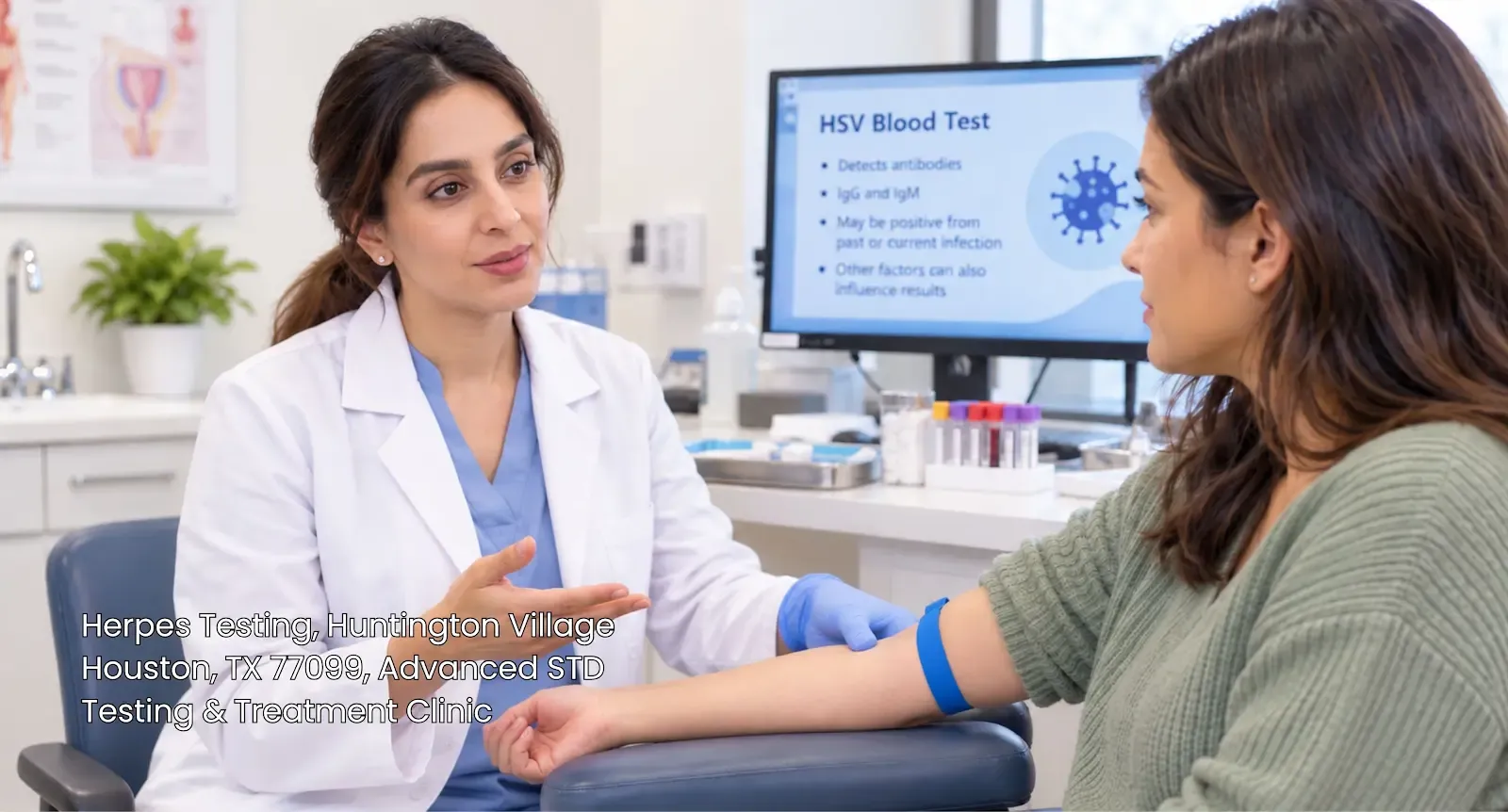
A positive herpes test can raise health concerns and questions about what to do next. Herpes testing checks for HSV, a virus linked to blisters or sores near the lips and in the genital area. A positive result does not always mean a recent infection, and some people never have symptoms. Knowing what your results mean can help you make informed health decisions.
Understanding a Positive HSV Test
HSV is an infection that may cause blisters or sore spots on the skin. There are two types. HSV-1 often causes sores near the mouth, while HSV-2 often causes sores near the genitals. But both types can affect either area.
Some people have HSV and feel fine. They may not even know they have the virus. Once they get it, it stays in the body for life.
Common Reasons for a Positive HSV Result
A positive HSV test can have different causes.
1. A Past Infection With No Signs
You may have had HSV for months or years without knowing it. Some people never notice sores or other signs, even though the virus stays in their body.
2. Recent or Past Contact With HSV
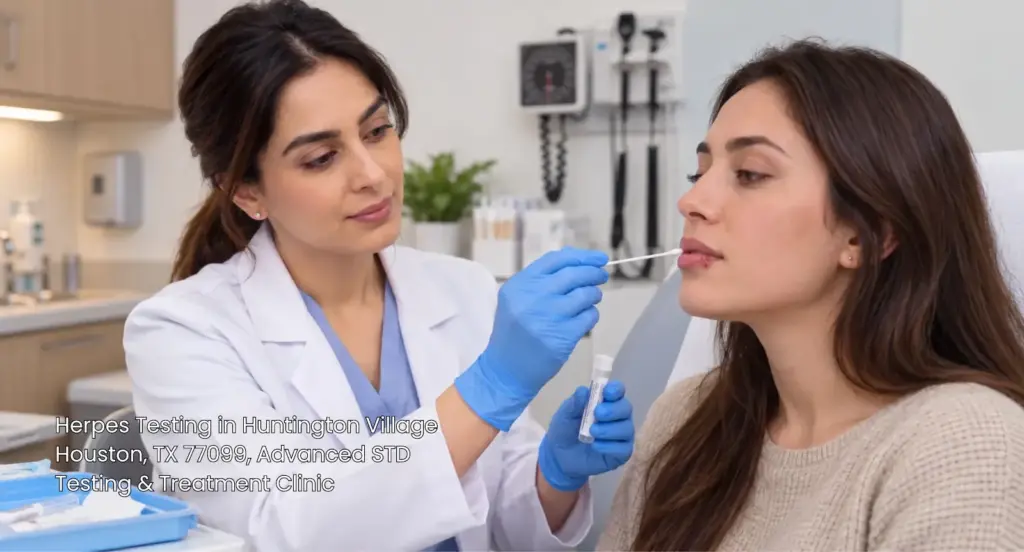
HSV can spread through skin contact or contact with sores during intimate activity. A blood test checks for antibodies your body makes after infection, but it usually cannot show when you got the virus.
3. A False-Positive Blood Test
Not every positive result confirms HSV. Some blood tests may detect antibodies in people who do not have the virus.
The CDC reports that one study found a commonly used HSV-2 blood test had only 57.4% overall specificity. This means some people without HSV-2 tested positive. Understanding herpes testing accuracy matters because false positives may require further testing.
Dr. Anna Wald, a herpes researcher and professor at the University of Washington, explains the concern:
“HSV blood tests may not always be reliable, making accuracy especially important because a positive result can lead to a lifelong diagnosis.”
For this reason, healthcare providers may recommend a second test to confirm a low-positive result.
4. The Type and Timing of the Test
A swab test checks for HSV in a sore, while a blood test looks for antibodies. According to the CDC, HSV-2 antibody tests have 80% to 98% sensitivity. However, testing soon after exposure may miss the infection because the body needs time to make enough antibodies. Your healthcare provider may suggest another test about 12 weeks after possible exposure.
How Advanced STD Testing & Treatment Clinic Can Help
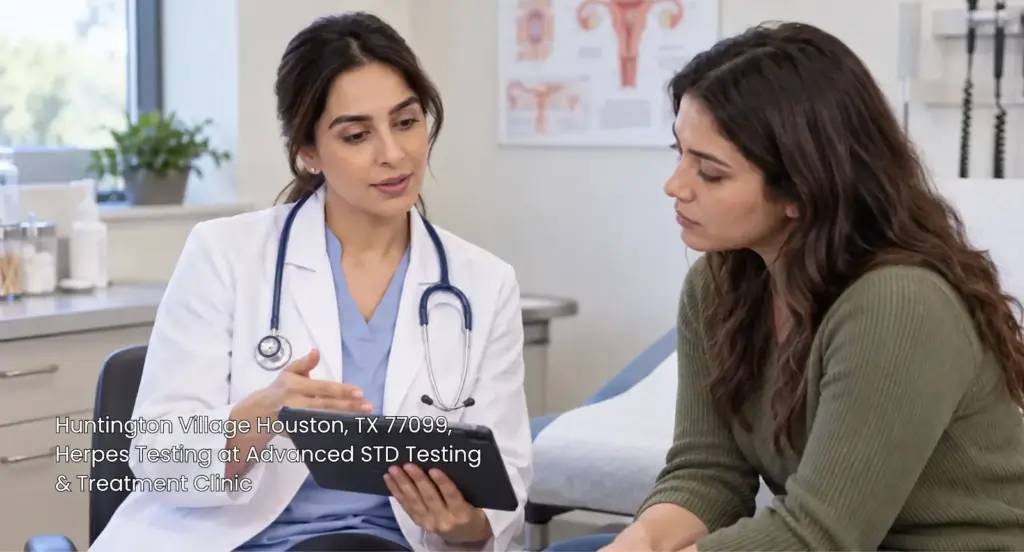
Advanced STD Testing & Treatment Clinic can help patients understand testing options and follow-up care. For residents seeking Herpes testing in Huntington Village, a qualified healthcare provider can help clarify next steps by discussing symptoms, possible exposure, and previous results.
When planning a visit, nearby residents may use Synott Rd & Webb Ln as a local reference point. The coordinates 29.66734526987179, -95.61437459137774 can also help identify the general location for local planning.
The CDC advises that low-positive HSV-2 blood test results may need confirmation with another method, such as a Biokit test or Western blot. A clinician can review your results and recommend suitable follow-up.
What Should You Do After a Positive Result?
A positive result does not mean you should panic. Residents of Huntington Village can discuss their HSV results with a healthcare professional. Those near Kennedy Elementary School can also ask if they need more testing.
A blood test cannot tell you when you got HSV or who you got it from. If you have sores, wait until they heal before having sex. Talk to a doctor about your symptoms. Antiviral medicine can help with symptoms and may reduce outbreaks.
How to Reach Advanced STD Testing & Treatment Clinic from Huntington Village
Getting Clear Answers After a Positive HSV Test
A positive HSV test can reflect an older infection, an asymptomatic infection, recent exposure, or a false-positive result. Test type and timing also affect the findings. Residents should seek professional guidance, confirm uncertain results, and learn about treatment options.
For guidance on your HSV results, Book a consultation with Advanced STD Testing & Treatment Clinic or call (346) 344-8313 to discuss your next steps.
FAQs
1. Can an HSV test be positive without symptoms?
Yes. Many people with HSV never develop noticeable symptoms or mistake mild signs for other skin conditions.
2. Can a positive HSV blood test be wrong?
Yes. False positives can occur, especially with certain HSV-2 blood tests that show low-positive values. Your provider may recommend confirmation.
3. Does a positive HSV test mean a recent infection?
No. Antibodies can remain in your body for life. A blood test usually cannot determine when you acquired HSV.
4. Can HSV go away after a positive test?
HSV remains in the body for life. However, antiviral medicines can help control symptoms and reduce outbreaks.
5. What should I do after a positive HSV result?
Discuss your results with a healthcare provider. Ask about confirmatory testing, treatment options, and ways to reduce the risk of spreading HSV.

Recent Posts
Explore the latest articles on sexual health, testing, and wellness. Stay updated with insights designed to keep you informed and confident about your health choices.